Estray reads the tools you already run. It scans nothing and installs nothing.
Where they exist it also reads ServiceNow CMDB, Lansweeper, VMware vSphere and the old asset spreadsheet, for names and hints.
Scanners
Tenable, Qualys, Rapid7 or CSV export: reads findings, requests rescans
- Tenablereads findings, requests rescans
- Qualysreads findings, requests rescans
- Rapid7reads findings, requests rescans
- CSV exportreads findings, requests rescans
Endpoint and device tools
CrowdStrike, Defender, SentinelOne: read. Your own Intune, Jamf Pro, Automox, FortiManager: change
- CrowdStrikeread
- Defenderread
- SentinelOneread
- Intunechange
- Jamf Prochange
- Automoxchange
- FortiManagerchange
Directories
Microsoft 365, and the acquired domain through a read-only script
- Microsoft 365read-only script
- the acquired domainread-only script
Tickets and chat
Jira, ServiceNow, Slack, Microsoft Teams: writes
- Jirawrites
- ServiceNowwrites
- Slackwrites
- Microsoft Teamswrites
IT gets a ticket in its own queue, not another login.
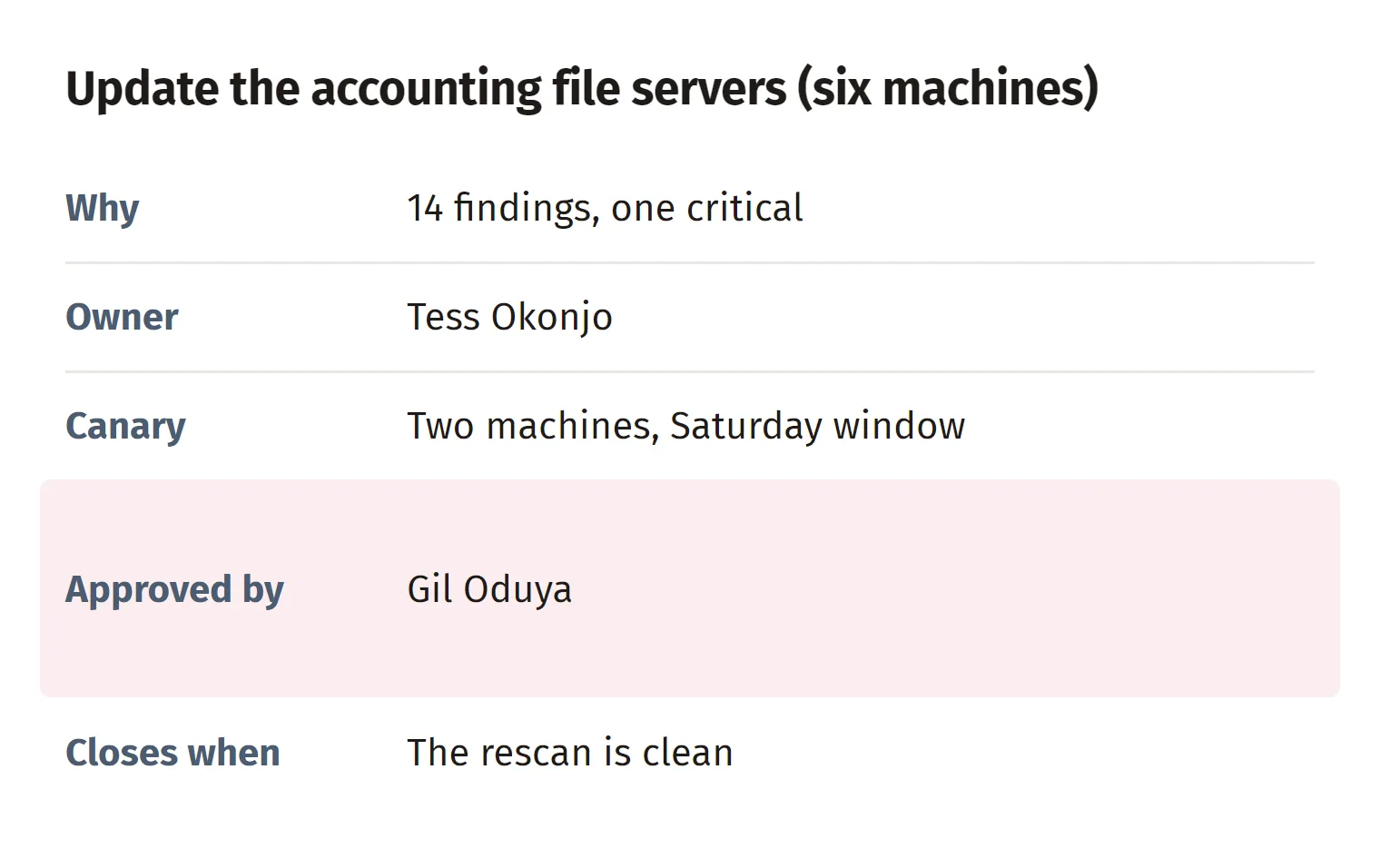
Example: the ticket for the six accounting file servers, approved by Gil Oduya.
IT never logs in to Estray. Each ticket carries the undo steps.
- Jira or ServiceNow: a ticket per fix, status synced both ways
- Slack or Teams: the owner's question, and the approver's link
- Your own Intune, Jamf Pro, Automox or FortiManager: the approved change
- The ticket again: closed by the rescan, or reopened with it

The model joins the names before it proposes anything.
4names
one machine, across scanner, endpoint tool, directory and spreadsheet
Example: the accounting file server, known by its address, its hostname, its computer name and 'accounting server 2'.
Exact keys go first: agent ID, serial number, a hardware address with its hostname.
A classifier we train joins renamed hosts and spreadsheet labels. Names that will not reconcile go to the director.
